

close
Choose Your Site
Global
Social Media
Views: 361 Author: Site Editor Publish Time: 2026-01-19 Origin: Site


Material Characteristics That Give a Non-Woven Bag Its Purpose
Common Misunderstandings About the Meaning of Non-Woven Bags
The term non-woven bag represents more than a simple alternative to plastic packaging. It describes a category of bags defined by a specific manufacturing method, material structure, and functional intention. In commercial, retail, and environmental contexts, the meaning of a non-woven bag is closely tied to durability, reusability, and material efficiency. Understanding what a non-woven bag means requires examining how it is constructed, why it behaves differently from traditional woven fabrics, and what practical role it plays in daily use and sustainability efforts.
A non-woven bag is a bag made from non-woven fabric, which is created by bonding fibers together through physical, thermal, or chemical processes rather than weaving or knitting. This distinction is central to its meaning. Unlike woven textiles, non-woven fabrics do not rely on interlaced yarns. Instead, they form a sheet-like structure with uniform strength and controlled thickness.
The meaning of a non-woven bag lies in its functional balance. It is designed to be strong yet lightweight, cost-effective yet reusable. This makes it suitable for applications where Heavy duty performance is required without the complexity of traditional textile production. Many non-woven bags are also Heat sealed, which reinforces seams and edges, contributing to their structural reliability.
From a practical standpoint, the non-woven bag represents an evolution in packaging logic: it fulfills carrying needs while reducing material waste and enabling repeated use. Its meaning is therefore rooted in both material science and everyday utility.
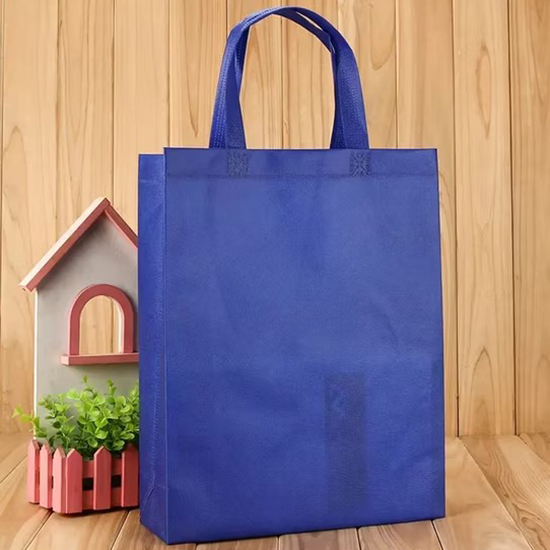
To understand what a non-woven bag means, it is essential to look at how it is produced. Non-woven fabric is typically made from synthetic fibers such as polypropylene, though Recycled material is increasingly used. Fibers are laid out in a web and bonded together using heat or pressure, forming a stable fabric without weaving.
This process gives the non-woven bag several defining characteristics:
Uniform surface texture
Controlled thickness
Predictable load-bearing capacity
Efficient mass production
Because the fabric does not unravel like woven cloth, non-woven bags maintain their shape even after repeated folding, making them naturally Foldable and easy to store. The manufacturing method also allows for customization in weight and density, which directly affects durability and lifespan.
The meaning of a non-woven bag is therefore inseparable from its structure. It is a product engineered for efficiency, designed to meet functional demands while minimizing unnecessary material complexity.
The materials used in a non-woven bag define how it performs and why it is widely adopted. Non-woven fabrics can be engineered to be water-resistant, breathable, or rigid depending on fiber density and bonding technique. These material traits translate directly into real-world benefits.
A key aspect of the non-woven bag meaning is reusability. Many designs are classified as Eco-friendly reusable because they can withstand multiple use cycles without significant degradation. When produced with Biodegradable or Recycled material, their environmental footprint is further reduced.
Below is a comparison table illustrating how material properties influence the functional meaning of a non-woven bag:
| Property | Non-Woven Bag | Traditional Plastic Bag |
|---|---|---|
| Structure | Bonded fibers | Single-layer film |
| Load capacity | Heavy duty options available | Limited |
| Reusability | Eco-friendly reusable | Often single-use |
| Seam strength | Heat sealed | Weak seals |
| Storage | Foldable | Foldable but fragile |
This table highlights how material characteristics shape not only performance but also the broader meaning of a non-woven bag in daily use.
The meaning of a non-woven bag becomes most clear when examined through its practical applications. These bags are widely used in retail, exhibitions, logistics, and household storage because they offer a reliable combination of strength and convenience.
In everyday scenarios, a non-woven bag performs well under repeated loading and unloading. Its Heavy duty variants are capable of carrying groceries, documents, or tools without tearing. The Heat sealed construction prevents seam failure, which is a common weakness in low-grade alternatives.
Another functional advantage lies in portability. Because most non-woven bags are Foldable, they can be easily carried inside another bag and reused when needed. This repeated usability reinforces their meaning as a practical solution rather than a disposable product.
Functionally, a non-woven bag means dependability. It is designed to work consistently across multiple use cases while maintaining structural integrity.
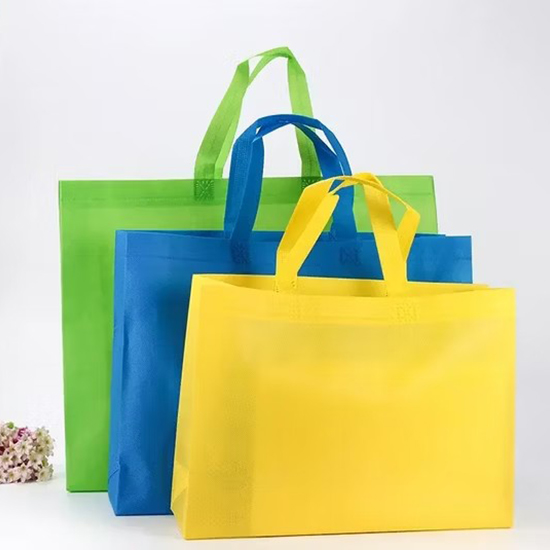
Beyond physical function, the non-woven bag carries a strong environmental meaning. It is often positioned as a response to excessive plastic waste and short-life packaging materials. While not all non-woven bags are biodegradable, their extended lifespan reduces overall consumption.
When manufactured using Recycled material, the environmental value of a non-woven bag increases significantly. Some designs also incorporate Biodegradable additives that accelerate decomposition under specific conditions. These factors contribute to the perception of non-woven bags as a more responsible choice.
The environmental meaning of a non-woven bag is therefore tied to usage behavior. Reuse is the key factor. A bag used dozens of times offsets its initial material footprint, aligning functionality with sustainability goals.
Understanding what a non-woven bag means also involves comparison. Unlike woven fabric bags, non-woven versions are simpler to produce and more consistent in quality. Compared to plastic bags, they offer superior durability and reusability.
Woven bags rely on interlaced fibers, which can fray over time. Plastic bags rely on thin films that tear easily. A non-woven bag sits between these extremes, offering a balanced solution that combines strength, flexibility, and cost efficiency.
This comparison reinforces the core meaning of a non-woven bag: it is a functional compromise optimized for repeated use and material efficiency rather than luxury or disposability.
The meaning of a non-woven bag is defined by its structure, material, and purpose. It is a bag made from bonded fibers rather than woven threads, engineered to deliver durability, reusability, and efficiency. Through features such as Eco-friendly reusable design, Heavy duty performance, Heat sealed seams, and Foldable convenience, the non-woven bag represents a practical response to modern carrying and packaging needs.
Understanding what a non-woven bag means goes beyond a simple definition. It involves recognizing how material science, function, and environmental considerations come together in a product designed for repeated, reliable use.
Q1: Is a non-woven bag the same as a fabric bag?
A non-woven bag is a type of fabric bag, but it differs from woven textiles because its fibers are bonded rather than woven.
Q2: Why are non-woven bags considered reusable?
Their bonded structure and Heavy duty options allow them to withstand repeated use without tearing.
Q3: Are all non-woven bags biodegradable?
Not all are fully Biodegradable, but many are made with Recycled material or enhanced for environmental performance.
Q4: What makes a non-woven bag strong?
Material density, fiber bonding, and Heat sealed seams contribute to strength.
Q5: Can non-woven bags be folded easily?
Yes, most non-woven bags are naturally Foldable, making them convenient for storage and transport.


