

close
Choose Your Site
Global
Social Media
Views: 0 Author: Site Editor Publish Time: 2026-05-15 Origin: Site


Traditional rigid packaging creates a massive operational bottleneck in modern logistics. Drums, metal bins, and corrugated boxes suffer from high tare weight. They also provide poor empty-storage density. This forces companies into inflexible handling workflows.
When supply chains rely on heavy containers, they waste valuable warehouse space. They drastically drive up freight costs over time. You need a modern, high-tensile alternative to streamline bulk material handling without compromising safety.
FIBC Bags (Flexible Intermediate Bulk Containers) solve this by combining immense structural strength with low unladen weight. Transitioning to flexible packaging requires a rigorous evaluation of payload compatibility, static control, and regulatory compliance. In this guide, you will learn how to match specific industrial pain points to customized engineering solutions, ensuring you prevent costly supply chain failures.
Versatility: FIBCs adapt to specific payload risks—from breathable designs for agriculture to static-dissipative structures for volatile chemicals.
Cost Efficiency: Integrating structural innovations (like Baffle designs) can increase shipping container utilization by up to 30% compared to standard jumbo bags.
Risk Management: Selecting the correct safety factor (5:1 for standard, 6:1 for hazardous) and electrostatic classification (Types A-D) is critical to avoiding compliance fines and workplace hazards.
ESG Impact: Replacing single-use rigid containers with recyclable woven polypropylene bulk bags directly supports corporate carbon-reduction mandates.
Different sectors face unique logistical hurdles. You cannot apply a one-size-fits-all approach to bulk packaging. Manufacturers engineer specific solutions to address exact payload vulnerabilities. Let us explore how tailored designs solve critical industry bottlenecks.
Friction occurs constantly during dry chemical filling and discharge. This movement generates static electricity rapidly. Unchecked static accumulation risks catastrophic explosive ignition in chemical plants. You must neutralize this threat immediately.
Engineers deploy Type C or Type D bulk bags to eliminate explosion risks. Type C options feature conductive threads and require strict grounding protocols. Type D variations utilize static-dissipative fabrics, requiring no grounding at all. Consider these containers the "high-tech vaults" of packaging. They lock away danger and maintain absolute plant safety.
Food and pharmaceutical sectors battle particulate ingress constantly. Moisture damage ruins sensitive APIs or dairy powders. Strict FDA and BRC audits demand zero-defect hygiene standards. Even a microscopic tear compromises an entire shipment.
The solution relies on ultra-pure materials. Manufacturers use 100% virgin polypropylene to eliminate recycled-resin contaminants. They insert polyethylene inner liners for maximum moisture barriers. Facilities also utilize sift-proof seams to prevent ultra-fine powder leakage. View these highly controlled units as "precision instruments." They deliver pristine goods from origin to destination.
Abrasive materials like sand, gravel, and cement destroy standard packaging quickly. Construction sites also demand extremely heavy load management. Standard sacks burst under the immense shear stress of jagged minerals.
Heavy-duty fabric provides the necessary defense. These bags feature a higher GSM (grams-per-square-meter) rating for puncture resistance. Reinforced lifting loops, such as Stevedore straps, enable single-point crane lifting on busy sites. They also boast UV stabilization enduring up to 2,500 hours of direct sun. Frame these rugged containers as the "steel-toe boots" of packaging.
Moisture buildup destroys harvested crops rapidly. A lack of airflow causes organic payloads like grains, seeds, and beans to spoil. Condensation inside a sealed container promotes rapid mold growth. Farmers lose massive percentages of their yield to improper storage.
The agricultural sector relies on uncoated, highly breathable woven structures. These specialized designs allow continuous moisture transfer. They facilitate passive ventilation through the fabric mesh. This airflow extends the shelf life of the organic payload dramatically. Agricultural operations depend on these breathable containers to maximize seasonal profits.
High freight costs severely impact retail margins. Brands need sustainable, visible bulk transit moving from warehouses to distribution centers. Unbranded, bulky transit packaging wastes marketing opportunities and inflates shipping budgets.
Companies utilize custom flexographic printing to solve this. They can print up to four colors directly onto the fabric. This turns every shipment into a mobile billboard for brand visibility. Empty bags also fold completely flat. This folding drastically reduces reverse-logistics costs. Warehouses can store thousands of folded bags on a single pallet.
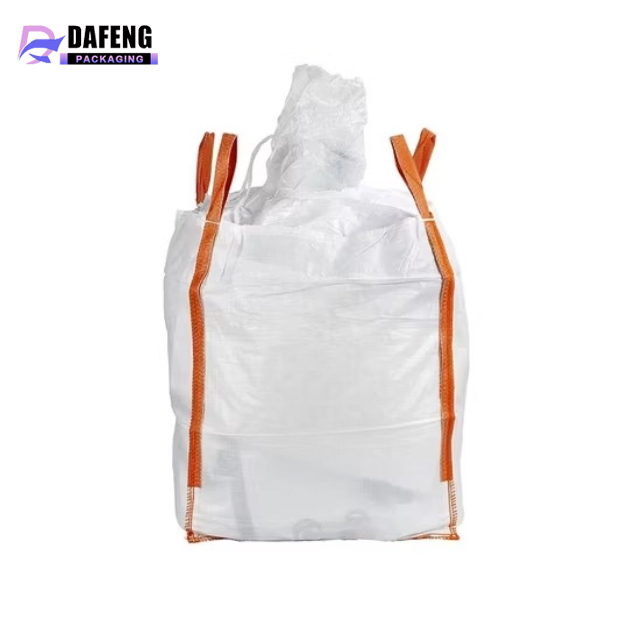
Procurement teams must move beyond general applications. You need a concrete framework for technical evaluation. Understanding exact specifications prevents purchasing errors. It also ensures the chosen container handles your specific operational stresses safely.
Grams-per-square-meter dictates the structural integrity of the fabric. You must match the GSM precisely to your payload density.
Low Density (90-100 GSM): Ideal for lightweight agricultural goods like oats or seeds.
Medium Density (120-140 GSM): Suits standard chemicals, fertilizers, and plastic pellets.
High Density (140+ GSM): Mandatory for abrasive, dense minerals like cement, gravel, or metal shavings.
The Safe Working Load defines the maximum weight capacity. Industry benchmarks typically range from 500 kg to 2,000 kg per unit. You must calculate the bulk density of your product first. Then, you match the total volume to the correct SWL rating. Overloading a 1,000 kg bag with high-density iron powder will cause catastrophic seam failure.
The physical shape of the container determines how efficiently it stores and ships. Choosing the wrong construction type wastes valuable shipping space.
U-Panel and Circular designs remain highly cost-effective. They serve general storage needs perfectly. However, they tend to bulge into a cylindrical shape when filled.
Baffle Bags (Q-Bags) are essential for maximizing container space. Internal baffles maintain a rigid, square shape across the entire profile. This geometry prevents outward bulging completely. It optimizes your pallet footprint, allowing side-by-side loading in shipping containers.
Construction Type | Shape When Filled | Best Use Case | Space Efficiency |
|---|---|---|---|
Circular / Tubular | Cylindrical / Bulging | Standard agriculture, fine powders | Moderate |
U-Panel | Square base, rounded sides | Heavy industrial materials | Good |
Baffle (Q-Bag) | Strictly Square | Export shipping, tight warehousing | Excellent (Up to 30% space savings) |
Even highly engineered fabrics have realistic physical limits. You must understand these boundaries to avoid catastrophic failures. Ignoring safety protocols introduces severe operational risks.
The Safety Factor measures the ultimate tensile strength against the working load. A 5:1 SF indicates a single-trip design. Manufacturers test these to withstand five times their rated capacity before tearing. A 6:1 SF denotes heavy-duty, multi-trip capability. You must use 6:1 SF models when handling hazardous materials under UN certifications.
Many buyers accidentally fall into regulatory compliance traps. You must never use standard Type A bags for combustible dust. You should also avoid them in areas containing flammable vapors. Type A offers zero electrostatic protection. Using the wrong electrostatic classification leads to immediate compliance fines. It also introduces extreme workplace hazards.
Operational reality often degrades structural integrity. Improper forklift handling remains the leading cause of lifting loop failure. Forklift tines with sharp edges slice through polypropylene fibers instantly. Furthermore, ignoring UV-exposure limits degrades the woven plastic. Leaving units in direct sunlight beyond their rated UV hours causes the fabric to turn brittle.
Always inspect lifting loops for fraying before forklift insertion.
Ensure the lifting tines are rounded and free of sharp burrs.
Store filled units under a covered roof to minimize UV degradation.
Never stand directly underneath a suspended bulk payload.
Transitioning from rigid bins to woven plastics requires a strong business case. Decision-makers must evaluate freight logistics and environmental impact. You need actionable criteria to select the right manufacturing partner.
Empty jumbo bags weigh under 5kg. They fold entirely flat. Compare this profile to 55-gallon steel drums or rigid plastic IBCs. Rigid containers consume massive volumes of warehouse space even when completely empty. Flexible alternatives free up expensive square footage immediately. They also eliminate the heavy tare weight associated with transporting steel drums. This reduction translates directly into lower outbound freight costs.
Corporate ESG (Environmental, Social, and Governance) mandates prioritize sustainable logistics. Woven polypropylene supports the circular economy directly. Flexible containers lower your transportation carbon footprint per ton of payload shipped. At the end of their lifecycle, facilities recycle them easily. Recyclers shred and downgrade the polypropylene into secondary products. These include landscaping fabrics and injection-molded plastic components. This diverts massive industrial waste away from landfills.
You must outline strict criteria when shortlisting a supplier. Do not choose a partner based solely on unit price.
Demand ISO Certifications: Verify they hold ISO 9001 for quality management systems.
Request Cleanroom Verification: Food and pharmaceutical buyers must audit the supplier’s cleanroom facilities.
Ensure Transparent Testing: Ask for documented testing protocols regarding SF load capacity and UV resistance hours.
FIBC packaging represents a highly engineered supply chain asset. They are not just simple commodity sacks. They combine anti-static technology, sift-proof engineering, and immense tensile strength to secure global logistics.
You must conduct a comprehensive payload audit before requesting manufacturer quotes. Assess your material's bulk density, moisture sensitivity, and flow characteristics. Evaluate your current warehouse handling equipment to ensure compatibility with various lifting loop designs.
Take action today to optimize your logistics workflow. Consult an FIBC specialist to map your chemical or physical payload properties. Download a targeted specification checklist to align your exact operational data with the perfect bag architecture.
A: It depends entirely on the rated safety factor. Bags carrying a 5:1 SF rating are strictly for single-trip use. You must not reuse them. Bags with a 6:1 SF rating accommodate multi-trip use. If you attempt reuse, you must enforce strict inspection protocols to check for fabric abrasion or loop fraying.
A: Baffle Bags contain specialized internal fabric panels sewn across the corners. These internal baffles prevent the bag from rounding out into a cylinder when filled. They maintain a strict square shape, which saves up to 30% in shipping container space.
A: These types define electrostatic properties. Type A offers no static protection. Type B prevents sparks but does not dissipate static. Type C uses conductive threads and requires physical grounding. Type D dissipates static automatically without any grounding requirements.
A: Yes, woven polypropylene is fully recyclable. However, you must thoroughly clean the bags of any hazardous chemicals or food-grade residues before they enter the recycling stream. Recyclers often downgrade clean bags into landscaping fabric or plastic pellets.


