

close
Choose Your Site
Global
Social Media
Views: 0 Author: Site Editor Publish Time: 2026-05-11 Origin: Site


Getting bulk packaging procurement right is high-stakes business. Incorrect specifications quickly lead to massive product loss, dangerous contamination, supply chain inefficiencies, and severe compliance failures. The PP Woven Bag stands out as a highly customizable solution for multiple sectors. However, many buyers wrongly assume a "one-size-fits-all" approach works across diverse industrial applications. Relying on generic specifications often creates logistical nightmares when moving sensitive or heavy loads.
This guide provides procurement teams and supply chain managers with a definitive framework. You will learn how to accurately evaluate, specify, and source the correct woven polypropylene packaging for your specific operational requirements. We explore critical dimensions from fabric weight to automated filling compatibility. By mastering these fundamentals, you protect your product integrity from the factory floor to the final destination.
Packaging specifications must align with industry-specific regulatory standards (e.g., FDA for food, hazmat for chemicals) and environmental exposure.
Evaluating fabric weight (GSM), weave density, and lamination is critical to balancing cost-efficiency with burst strength and moisture resistance.
Procurement success relies on matching bag construction (valves, tops, bottoms) with existing automated or manual filling equipment.
Supplier shortlisting should prioritize verified certifications, rigorous sample testing, and transparent lead times over unit cost alone.
Procurement teams constantly balance material expenses against performance requirements. Choosing substandard industrial woven sacks creates severe financial consequences. Upfront savings quickly disappear when materials fail during transit. Spillage means permanently lost inventory. Transit damage triggers immediate customer rejections and damages your brand reputation. You must evaluate material costs alongside the cascading expenses of product loss and clean-up efforts.
Regulatory frameworks heavily dictate material choices across different sectors. Mandatory compliance rules apply strictly to food contact applications and hazardous material transport. You face severe fines, halted shipments, and facility shutdowns if your packaging violates these established standards. Certifications like FDA compliance or UN hazmat approvals are non-negotiable requirements rather than optional upgrades.
Bag dimensions and closure mechanisms directly influence your warehouse operations. Stacking stability dictates how densely you can store pallets. Unstable loads create severe warehouse safety hazards. Additionally, your packaging choices directly affect filling speeds. Automated production lines jam frequently if valve sizes do not match filling spouts perfectly. Operational compatibility ensures your supply chain moves without costly bottlenecks.
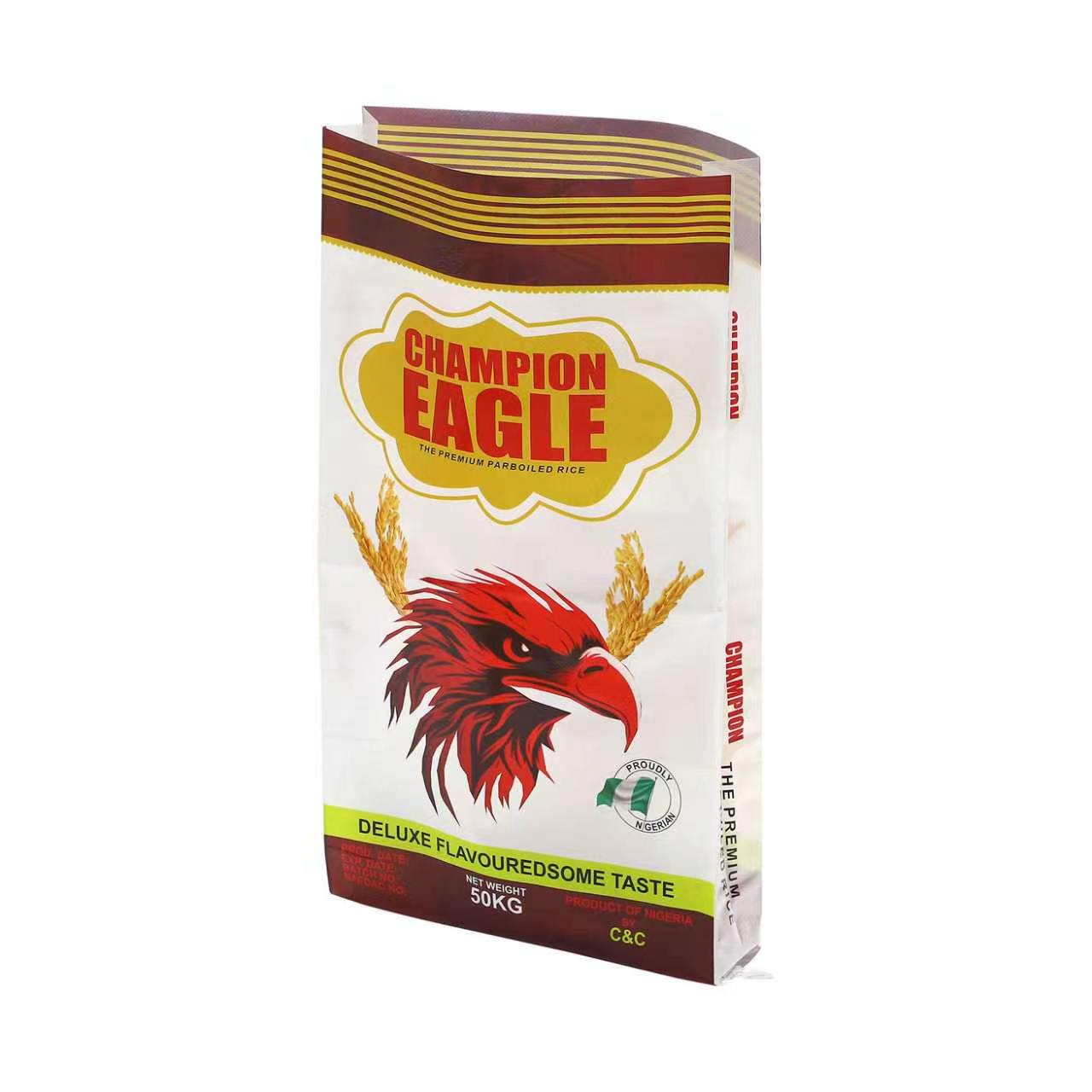
Agricultural applications require highly specific material traits based on the exact payload. Organic produce demands breathability to prevent premature rot. Conversely, hygroscopic fertilizers dissolve rapidly if exposed to ambient moisture. Successful fertilizer bags require absolute moisture control to preserve the chemical composition.
Outdoor field storage remains common in agriculture. UV stabilization prevents rapid plastic degradation under direct sunlight. Anti-slip printing improves pallet stability during rough agricultural transport. Furthermore, internal PE (Polyethylene) liners isolate nitrogen-based fertilizers effectively from atmospheric humidity.
Human consumption standards allow zero room for error. Preventing contamination, resisting pests, and maintaining rigorous hygiene standards define success. Granular foods like flour, sugar, and rice require pristine packaging environments to clear health inspections smoothly.
Secure food packaging bags mandate 100% virgin polypropylene. This ensures the plastic remains BPA-free and undeniably food-grade. Manufacturers must use ultrasonic heat-cut edges. Traditional blade cuts leave loose plastic threads behind. These threads inevitably contaminate the food product. Finally, you should only source these items from certified cleanroom manufacturing facilities.
Industrial chemicals pose extreme environmental and safety hazards. Sift-proof containment prevents fine powders from escaping through tiny fabric pores. Chemical inertness guarantees the bag material will not react dangerously with its contents. Mitigating static discharge prevents catastrophic explosions when handling highly volatile substances.
Effective chemical packaging bags utilize co-extruded inner liners for maximum barrier protection. Double-stitched seams reinforce the primary stress points. Anti-static properties safeguard facility workers and transport operators moving fine chemical powders across dry environments.
Construction sites represent the harshest handling environments imaginable. Bags endure jagged rocks, manual tossing, and rough concrete floors. Maximum tear resistance and puncture defense determine your material success here.
Reliable construction sand bags utilize an unusually high GSM (Grams per Square Meter). Reinforced hems stop minor snags from turning into massive tears. You need exceptionally dense weave counts to craft heavy duty woven bags. These dense weaves withstand heavy aggregate loads without bursting under sudden pressure.
Specifying bulk packaging bags requires understanding several technical dimensions. Fabric weight and tensile strength dictate overall durability. We measure fabric weight in GSM. A higher GSM indicates thicker, stronger tape yarns. You must calculate the minimum required weight based strictly on your target payload.
Chart: Recommended GSM Based on Payload Capacity | ||
Payload Capacity | Recommended GSM Range | Typical Application |
|---|---|---|
25 kg (55 lbs) | 55 - 65 GSM | Food grains, light seeds, animal feed |
50 kg (110 lbs) | 70 - 85 GSM | Fertilizers, fine chemicals, sugar |
75+ kg (165+ lbs) | 90 - 120 GSM | Construction aggregates, dense minerals |
Lamination choices dictate moisture defense. Unlaminated fabrics breathe well. This helps agricultural goods vent naturally. Externally laminated bags provide excellent water resistance. They shed rain effectively during brief outdoor exposures. Inner-lined bags offer absolute moisture-proof protection. You use these inner liners for hygroscopic chemicals and sensitive food powders.
UV stabilization levels require careful supply chain analysis. Standard polypropylene degrades rapidly under solar radiation. You must specify UV protection based on anticipated hours of direct sunlight. A bag sitting outside for three days needs drastically different stabilizers than one stored indoors immediately.
Top and bottom construction correlates directly to your packing efficiency. Open-mouth tops work best for manual or semi-automated bulk filling. Valve tops integrate perfectly into high-speed automated machinery. Block bottoms stack neatly into perfect cubes. This maximizes pallet density and warehouse space. Sewn bottoms cost less but create a rounded base. Rounded bases often bulge unpredictably during palletization.
Procurement teams encounter several predictable traps during specification processes. Under-specifying GSM remains the most frequent error. Buyers aggressively cut material thickness to secure lower unit prices. This choice risks high burst rates during transit drops or forklift handling. The subsequent clean-up expenses always dwarf the initial material savings.
Equipment mismatch halts production lines entirely. Facilities often purchase generic valve bags without measuring their actual spout dimensions. This mismatch leads to immediate bottlenecks. You may even require expensive machinery retooling to accommodate the incorrect packaging. To avoid this, follow these numbered steps before ordering:
Measure the exact outer diameter of your facility's filling spouts.
Calculate the necessary valve width and length required for secure attachment.
Request a small batch of physical samples to test on your live equipment.
Verify the flow rate does not decrease due to restrictive valve dimensions.
Ignoring slip characteristics causes dangerous warehouse accidents. Highly laminated, glossy surfaces look fantastic for branding. However, they lack inherent friction. Pallets wrapped in glossy materials collapse easily when forklifts brake abruptly. Always request anti-slip coatings or specialized matte finishes. This simple choice prevents catastrophic warehouse spills.
Assuming universal UV resistance destroys outdoor inventories. Standard white woven bags are not outdoor-ready. Treating them as such leads to rapid photodegradation. The plastic becomes brittle within weeks. It eventually shatters upon lifting. Always verify the specific UV treatment hours required for agricultural or construction settings.
Securing a reliable manufacturing partner demands rigorous vetting. Certification verification must occur before any formal engagement. Mandate verifiable proof of ISO 9001 for baseline quality management. Require ISO 22000 or BRC certificates for food safety applications. Demand official UN certifications if you transport hazardous chemical materials.
Establish strict sample testing protocols. Never commit to bulk orders based purely on digital specifications. Physical testing separates capable manufacturers from poor ones. Conduct your own internal audits on the received samples.
Standard Sample Testing Protocols | ||
Test Type | Primary Objective | Passing Criteria |
|---|---|---|
Drop Test | Assess bottom seam strength | Survives a 1.2-meter freefall without bursting |
Burst Test | Measure overall fabric tension | Withstands targeted internal pneumatic pressure |
Sift Test | Ensure fine powder retention | Zero particulate leakage during extended vibration |
Assess production scalability early in your discussions. Evaluate the supplier's minimum order quantities (MOQs) realistically. Investigate their average lead times during normal months. More importantly, check their capacity to handle seasonal volume spikes. Agricultural harvests and spring planting seasons create massive demand surges. Your supplier must possess enough reserve capacity to guarantee delivery during these critical windows.
Review customization and printing capabilities thoroughly. BOPP (Biaxially Oriented Polypropylene) reverse printing delivers stunning, photorealistic graphics. It suits premium retail products perfectly. Flexographic printing offers a highly cost-effective alternative for industrial bulk items. Ensure the supplier prints barcodes crisply. Blurry barcodes cause immense scanning delays inside modern distribution centers.
Selecting the right packaging demands a delicate balance. You must align payload weight, environmental exposure risks, compliance rules, and your specific filling technology. Generic material choices inevitably lead to expensive downstream failures. Your specific industry dictates the necessary features, whether that means UV stabilization for fertilizers or cleanroom manufacturing for food goods.
Never bypass physical sample testing. Validating bag dimensions and performance traits on your actual facility floor prevents disastrous bulk order mistakes. Certifications verify safety standards, while drop tests confirm real-world durability. Both steps remain absolutely essential to the procurement process.
Take action by auditing your current packaging failure rates. Track precisely where and why your bags currently burst or leak. Consult with a qualified packaging engineer to refine your exact GSM, lamination, and closure specifications. A highly tailored approach ensures your materials transport safely, efficiently, and profitably.
A: Lamination applies a thin plastic film directly to the bag's exterior or interior surface. It provides excellent water resistance and stops fraying. An internal PE liner is a separate, free-floating plastic bag inserted inside the woven sack. Liners offer superior, absolute moisture-proof protection required for highly hygroscopic powders and volatile chemicals.
A: GSM correlates directly to payload weight and handling environments. For standard 25kg loads, 55-65 GSM suffices. Heavy duty applications moving 50kg to 75kg of rough aggregate usually require 85 to 120 GSM. You must also factor in handling methods. Manual tossing necessitates a higher GSM than smooth, automated palletization.
A: No. Standard industrial sacks often use recycled resins or lack hygiene controls. Food packaging requires 100% virgin, BPA-free polypropylene. Furthermore, food-grade bags must undergo cleanroom manufacturing. They also require ultrasonic cutting to prevent loose plastic threads from physically contaminating the food product.
A: Polypropylene is technically 100% recyclable. However, previous contents dictate actual recyclability. Construction bags carrying harmless sand easily enter recycling streams once cleaned. Conversely, bags holding hazardous chemicals or toxic fertilizers usually require specialized disposal or incineration. They cannot enter standard plastic recycling facilities due to severe contamination risks.


